Business opportunities
Introduction
- This part of the Colife playbook helps you to recognize the business potential of data and its value co-creation opportunities within a collaborative asset management setting.
- A practical framework for business model design guides you through relevant questions and key design choices at different stages of data-enabled business development.
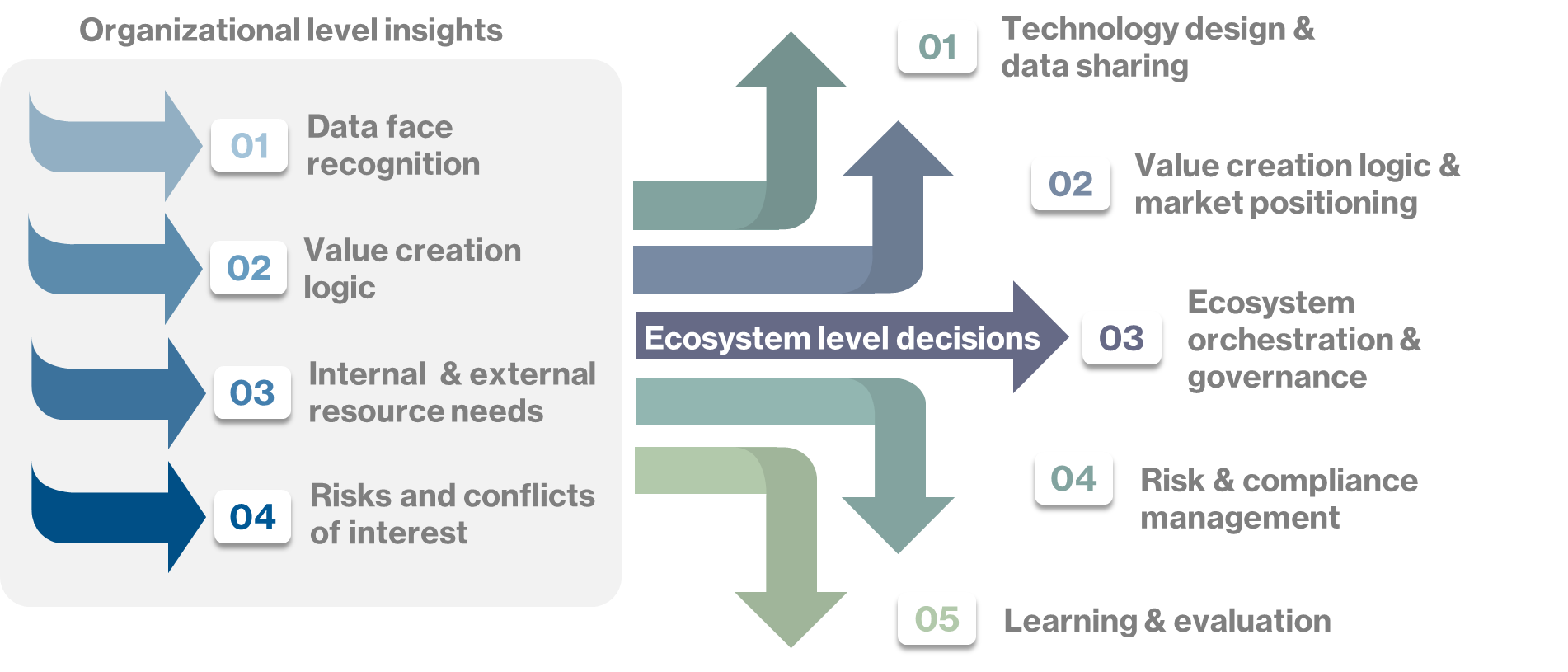
- The framework is built in two layers, forming a continuum from organizational readiness to ecosystem level key design choices
How to work with the tool
- Two-level logic: from inside out: The tool progresses from organizational readiness to ecosystem-level value creation as a continuous process
- Build a strong foundation within the organization Understand your data, value creation logic, resources, and risks before engaging in broader collaboration
- Identify and resolve critical uncertainties Unclear areas at the organizational level guide development and determine readiness to move forward
- Expand the analysis to ecosystem-level dynamics Examine data sharing, value flows, roles, governance, and collaboration rules within the network
- Align internal readiness with external collaboration Sustainable data-driven business emerges when organizational capabilities and ecosystem structures support each other
Organizational level
- Is your company ready for developing business within a collaborative asset management setting?
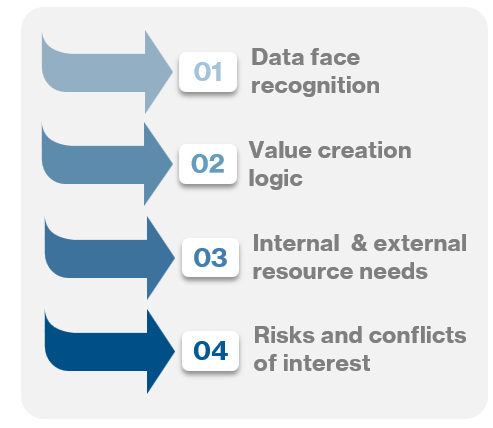
- Know your data, recognize the value creation logic, find the needed resources and ponder the possible risks and conflicts
- The first layer of the framework guides you through a set of questions that your company needs to solve before targeting towards ecosystem level value co-creation.
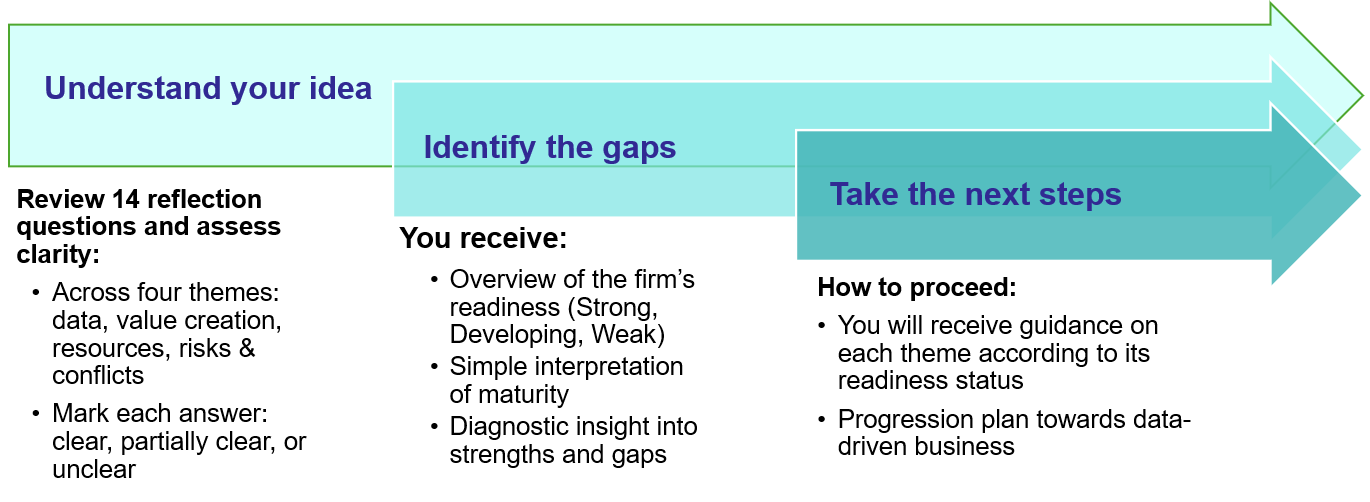
- In this first phase, you will assess your firm’s status through question sets under each of the four dimensions. This assessment reveals the overall readiness level for each theme and provides recommendations for progressing toward a data-driven business in a collaborative setting.
Reflect on Your Data-driven Business Opportunity
Knowing your data - What data matters, what value it creates
Use the table below to assess how clear your current understanding is for each question. Click one status per row to mark the current level of clarity.
| Question | Clear | Partially clear | Unclear |
|---|---|---|---|
|
Data Value Where does data create real value for us? |
|||
|
Data Assets What data do we control or access? |
|||
|
Data Exchange Can sharing our data create value for others? |
|||
|
Data Needs What data do we need from whom? |
<span class="assessment-score-label">Overall score</span>
<strong>Not started</strong>No selections yet. Click a status for each question to record your assessment.
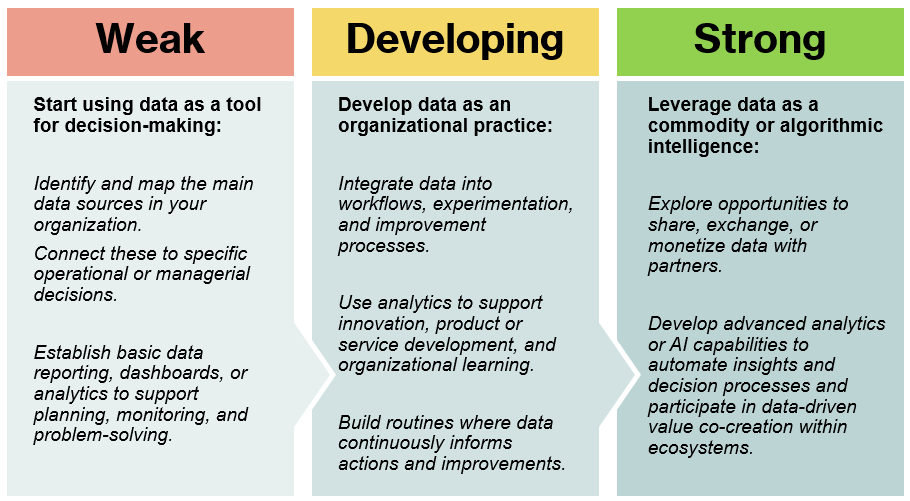
Knowing your data - status overview and guidance for progression
- Focus on improving how your firm recognizes and leverages its data assets.
Value Creation Logic - What problem we solve, for whom, with whom
Use the table below to assess how clear your current understanding is for each question. Click one status per row to mark the current level of clarity.
| Question | Clear | Partially clear | Unclear |
|---|---|---|---|
|
Data-related Problem What problem do we want to, or could we solve? |
|||
|
Customer Who is the customer of our data or data-based offering? |
|||
|
Offering What does our product or service help the customer achieve? |
|||
|
Co-creation With whom is the value created? |
<span class="assessment-score-label">Overall score</span>
<strong>Not started</strong>No selections yet. Click a status for each question to record your assessment.
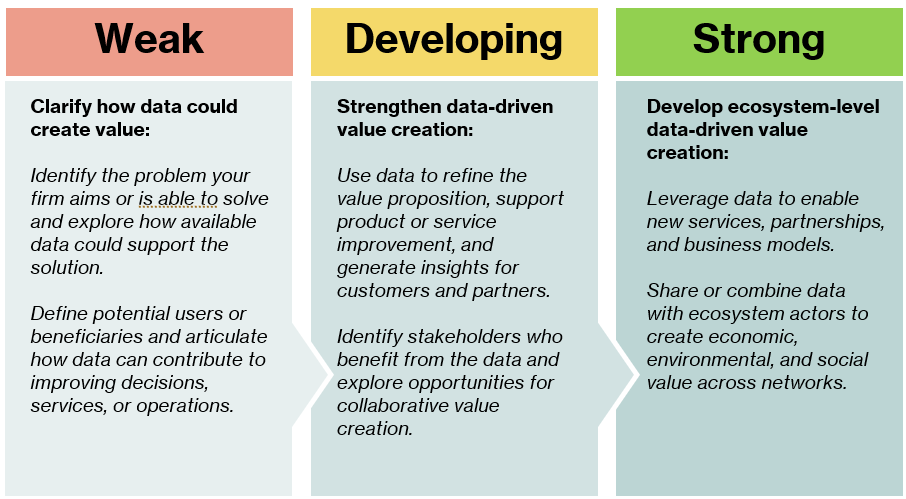
Value Creation Logic - status overview and guidance for progression
Focus on improving the clarity of your firm’s value creation logic.
Resource Needs - What resources we have and what we need from whom
Use the table below to assess how clear your current understanding is for each question. Click one status per row to mark the current level of clarity.
| Question | Clear | Partially clear | Unclear |
|---|---|---|---|
|
Owned Resources What resources do we have that others need for value creation? |
|||
|
Missing Resources What resources do we need, and from whom? |
<span class="assessment-score-label">Overall score</span>
<strong>Not started</strong>No selections yet. Click a status for each question to record your assessment.
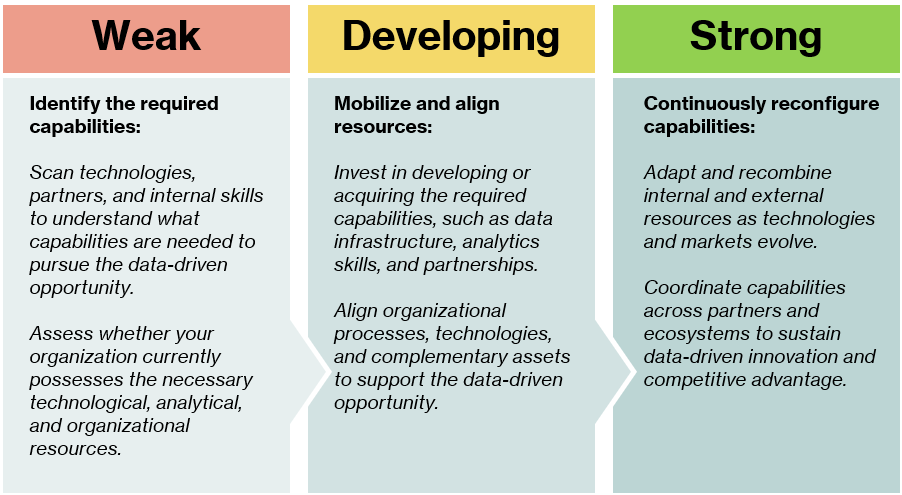
Resource needs - status overview and guidance for progression
- Focus on strengthening the resources and capabilities needed to deliver your offering.
Risks & conflicts - Where do risks and conflicts arise and how to manage
Use the table below to assess how clear your current understanding is for each question. Click one status per row to mark the current level of clarity.
| Question | Clear | Partially clear | Unclear |
|---|---|---|---|
|
Data Risks What are the risks of sharing data for us? |
|||
|
Conflicts of interest What conflicts and with whom could arise if we share our data? |
|||
|
Trade-offs What value may be sacrificed or destroyed if we share data? |
|||
|
Conflict management How will the risks of data sharing and conflicts be managed? |
<span class="assessment-score-label">Overall score</span>
<strong>Not started</strong>No selections yet. Click a status for each question to record your assessment.
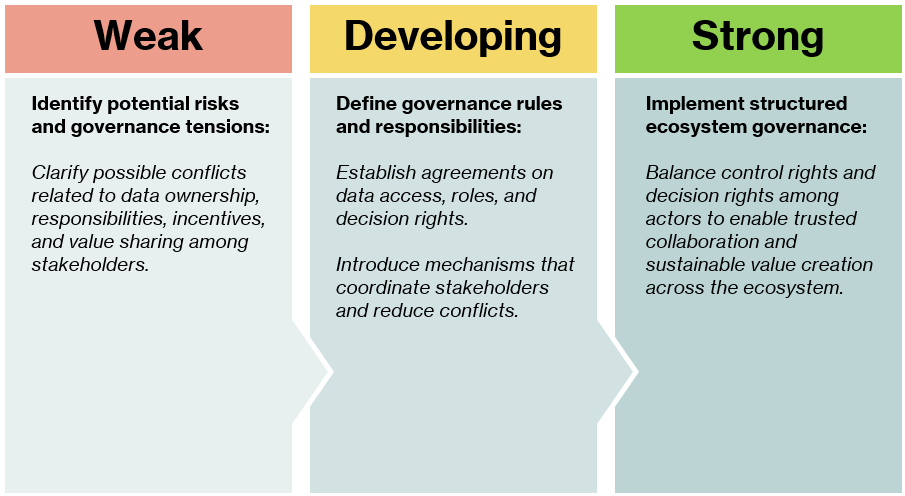
Risks and conflicts - status overview and guidance for progression
- Focus on improving how risks, trade-offs, and conflicts are addressed.
Ecosystem level
- Reflect back to your organizational level results:
- What are your strengths?
- What are the biggest challenges?
- What are the most promising aspects?
- -> Be ready to transfer your organizational level results to ecosystem level discussion
- The second layer of the framework guides you through a set of questions that your ecosystem needs to solve before targeting towards data-driven value co-creation.
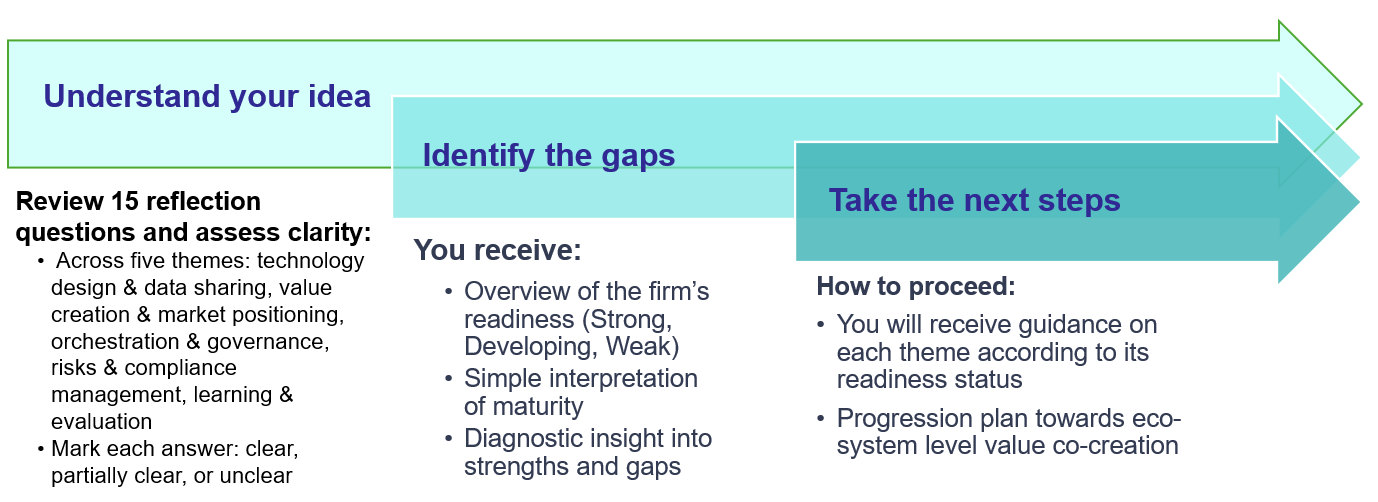
- In this second phase, you will assess your ecosystem’s status through question sets under each of the five dimensions. This assessment reveals the overall readiness level for each theme and provides recommendations for progressing toward ecosystem level value co-creation.
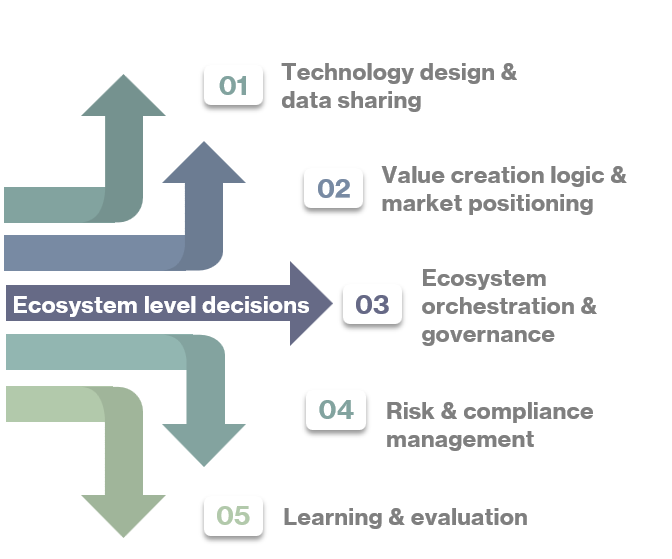
Reflect on Your Readiness towards Ecosystem Level Value Co-creation
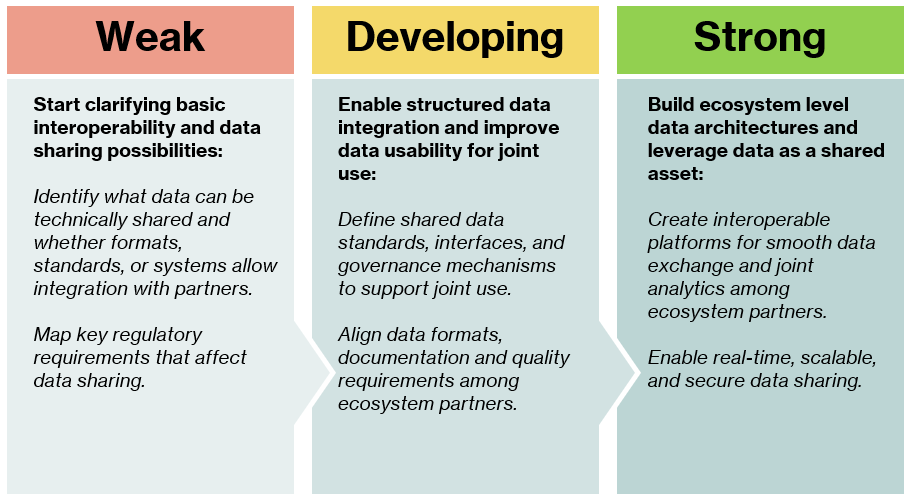
Technology design & data sharing - status overview and guidance for progression
- Focus on improving how your firm designs, integrates and shares data assets for joint use in the ecosystem
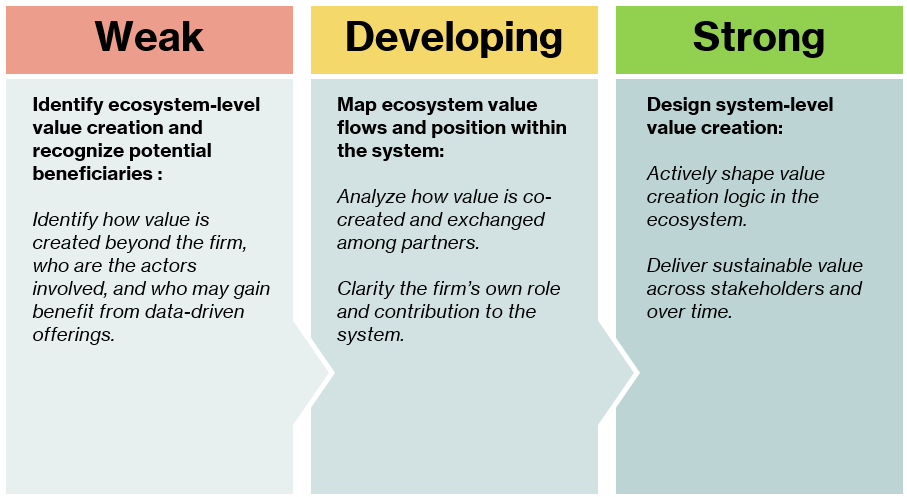
Value creation logic & market positioning - status overview and guidance for progression
- Focus on improving the clarity of your firm’s value creation logic and market positioning considerations in the ecosystem.
Ecosystem orchestration & governance - Who governs and how?
Use the table below to assess how clear your current understanding is for each question. Click one status per row to mark the current level of clarity.
| Question | Clear | Partially clear | Unclear |
|---|---|---|---|
|
Roles & Commitment Who plays which role, what do they contribute, and how is commitment ensured? |
|||
|
Leadership & Beneficiaries Who leads the ecosystem and who makes which decisions? |
|||
|
Ownership Who owns the platform and who owns the data? |
|||
|
Ecosystem Rules What rules govern participation and how much autonomy do actors have? |
<span class="assessment-score-label">Overall score</span>
<strong>Not started</strong>No selections yet. Click a status for each question to record your assessment.
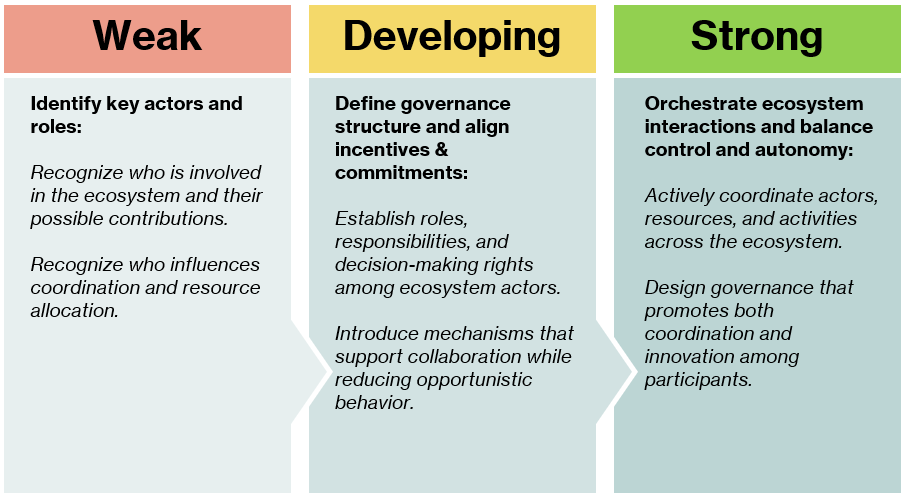
Ecosystem orchestration & governance - status overview and guidance for progression
- Focus on improving the recognition and capability of ecosystem governance.
Risk & compliance management - Where do tensions arise and how to manage?
Use the table below to assess how clear your current understanding is for each question. Click one status per row to mark the current level of clarity.
| Question | Clear | Partially clear | Unclear |
|---|---|---|---|
|
Goal Misalignment Do stakeholder goals or interests conflict, and how? |
|||
|
Value Contradiction How might long-term and short-term value contradict? |
|||
|
Conflict Management How can tensions and conflicts between ecosystem actors be managed? |
<span class="assessment-score-label">Overall score</span>
<strong>Not started</strong>No selections yet. Click a status for each question to record your assessment.
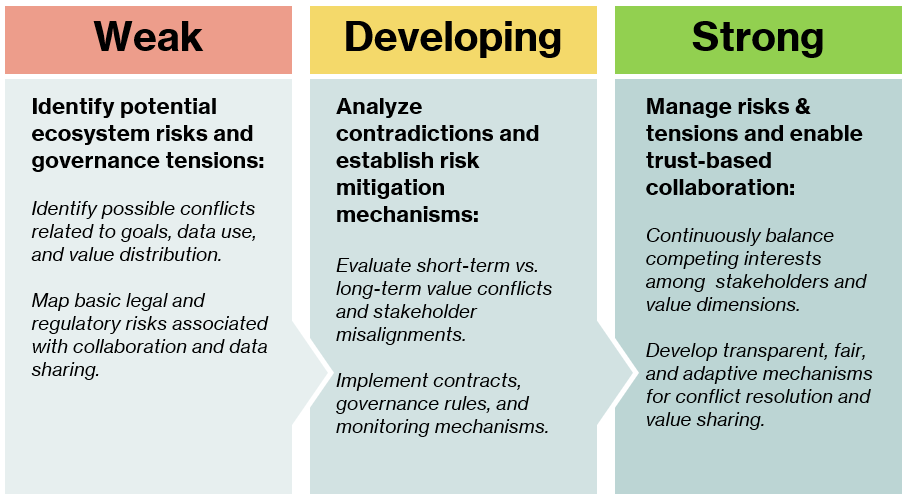
Risks & compliance management - status overview and guidance for progression
- Focus on strengthening how tensions (e.g., goal misalignment, value contradiction) in the ecosystem are addressed.
Learning & evaluation - How does the ecosystem evolve?
Use the table below to assess how clear your current understanding is for each question. Click one status per row to mark the current level of clarity.
| Question | Clear | Partially clear | Unclear |
|---|---|---|---|
|
Adaptation How can the ecosystem business model align with the firm’s long‑term goals? |
|||
|
Scaling When should a new partner join, and what value would they add? |
<span class="assessment-score-label">Overall score</span>
<strong>Not started</strong>No selections yet. Click a status for each question to record your assessment.
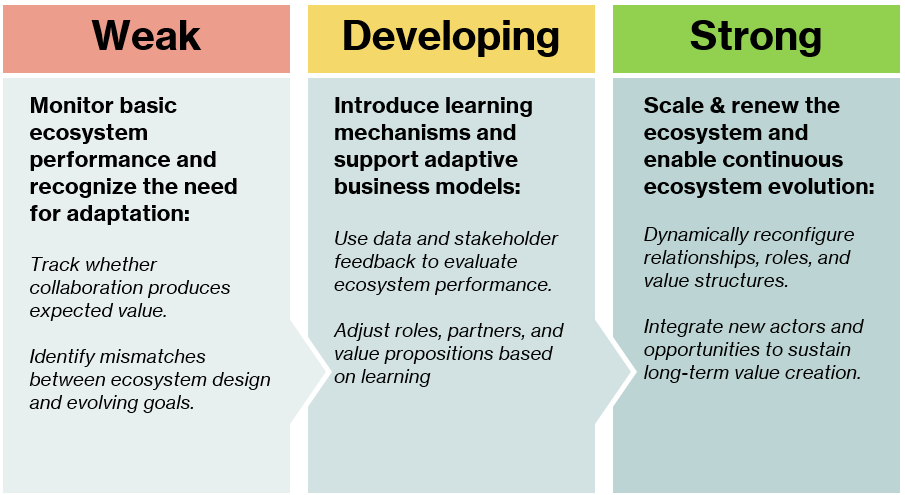
Learning & evaluation - status overview and guidance for progression
- Focus on improving the clarity of ecosystem evolvement.